

The Phuket Most Investors Haven't Seen Yet
Ask most expats about Phuket and you get the same answer, with variations. The long weekends. The beaches they keep meaning to go back to. Maybe the apartment they looked at a few years ago and never followed up on. What almost nobody mentions is what's actually being built there right now, because most people's mental model of Phuket stopped updating sometime around 2019.
But the reality is, Phuket is in the middle of the largest infrastructure transformation in its history: a THB 10 billion airport expansion, a second international airport planned nearby, a 42-kilometre light rail network, a THB 4.3 billion international hospital, and commercial developments that will permanently change how the island functions as a place to live rather than just to visit. For property investors, the question isn't whether any of this is real. It is. The question is whether you're positioned before it's priced in or after.
This Isn't a Tourism Story Anymore
Phuket's economy has long been tourism with property attached. That description is quickly becoming incomplete. Airports of Thailand's decision to commit THB 10 billion to expanding Phuket International Airport is as clear a signal as any that the Thai government has made the same assessment. The Phase 2 expansion will raise the airport's annual capacity from 12.5 million to 18 million passengers, expanding the international terminal and upgrading the systems that underpin it. AOT is doing this as part of a THB 80 billion nationwide programme, the largest aviation investment in Thailand's history, and Phuket sits near the top of the priority list.
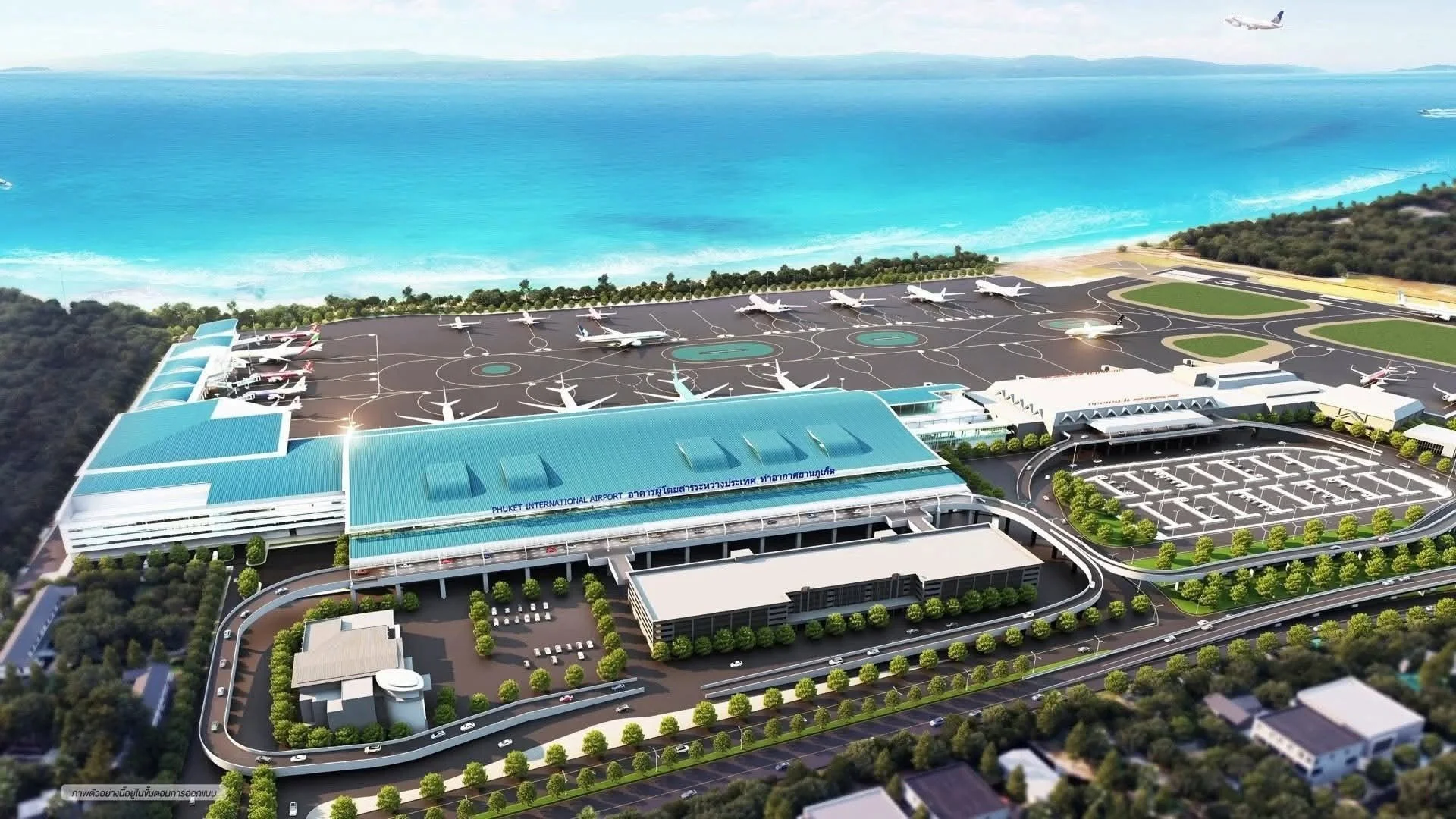
Alongside it, Thailand has announced plans for a New Andaman Airport in Phang Nga – on the mainland just north of the island – part of a combined Andaman-Lanna airport programme designed to handle more than 20 million passengers a year and serve as a second gateway for the wider Andaman coast. As of mid-2026, the project remains at the feasibility and study stage, with AOT still preparing to submit it for Cabinet approval before tendering can even begin. The direction is unmistakable: the Thai government is treating Phuket as a long-term growth corridor, with the airports coming first.
The Development That Changes Who Actually Lives There
One kind of infrastructure turns a popular destination into somewhere people choose to live full-time: healthcare. Not clinics or wellness retreats, but a properly equipped, internationally accredited hospital that you'd otherwise fly back to Bangkok for. Phuket is about to get one, and it matters more for the property market than most commentators have acknowledged.
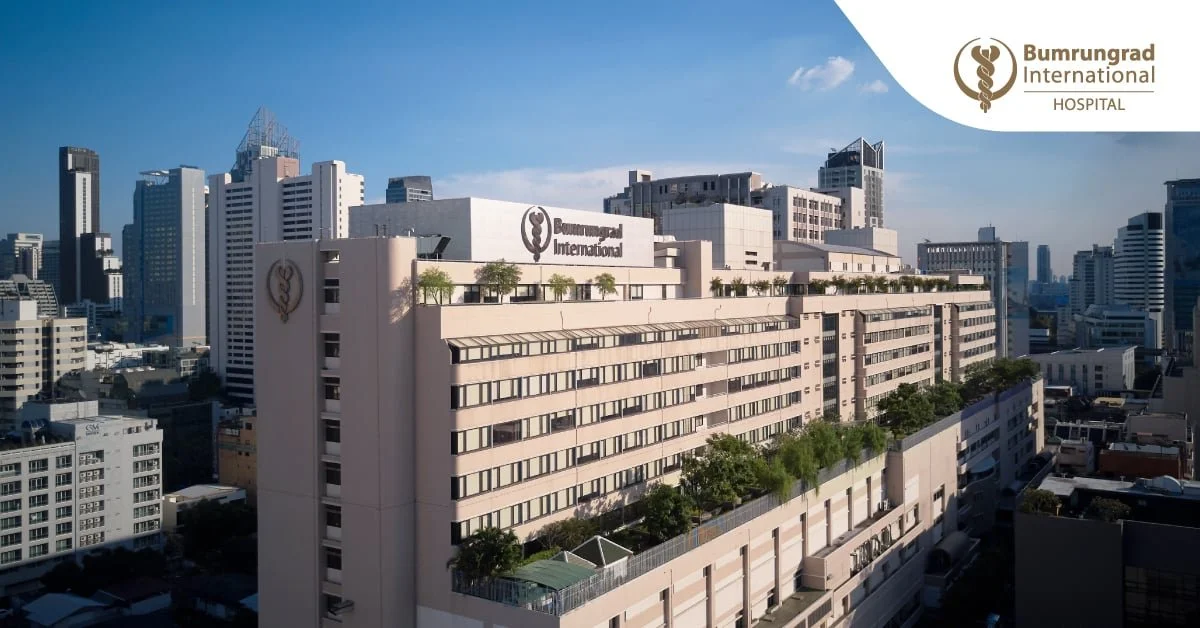
Bumrungrad International Hospital – Thailand's most respected private hospital brand and the only Thai institution ranked among the world's best hospitals for five consecutive years, is constructing a THB 4.3 billion campus in Mai Khao, three kilometres from the airport, with the first phase due to open in 2027. It will serve an island that already has more than 400,000 permanent residents, an internationally mobile expatriate community of roughly 115,000, and a growing base of long-stay residents from Europe, Australia, and across Asia who currently leave for Bangkok when anything serious arises. Bumrungrad's presence removes the single most common reason high-income residents give for not committing to Phuket as a primary base rather than a secondary one.
For investors, world-class healthcare infrastructure does something specific to residential property markets: it converts seasonal demand into year-round demand, and it attracts the kind of tenants, older, wealthier, internationally mobile, who rent quality and stay. It shifts the entire floor of the market upwards, and it does so in a way that's durable because it creates genuine reasons to be there rather than just attractive ones.
Getting Around the Island: The Projects Already in Motion
Phuket's most persistent challenge has always been its geography. One main road running north to south, a mountain range that complicates access to the west coast, and a seasonal tourism model that pours traffic onto infrastructure that was never built for it. That is being addressed, deliberately and at a serious scale, across three simultaneous projects.
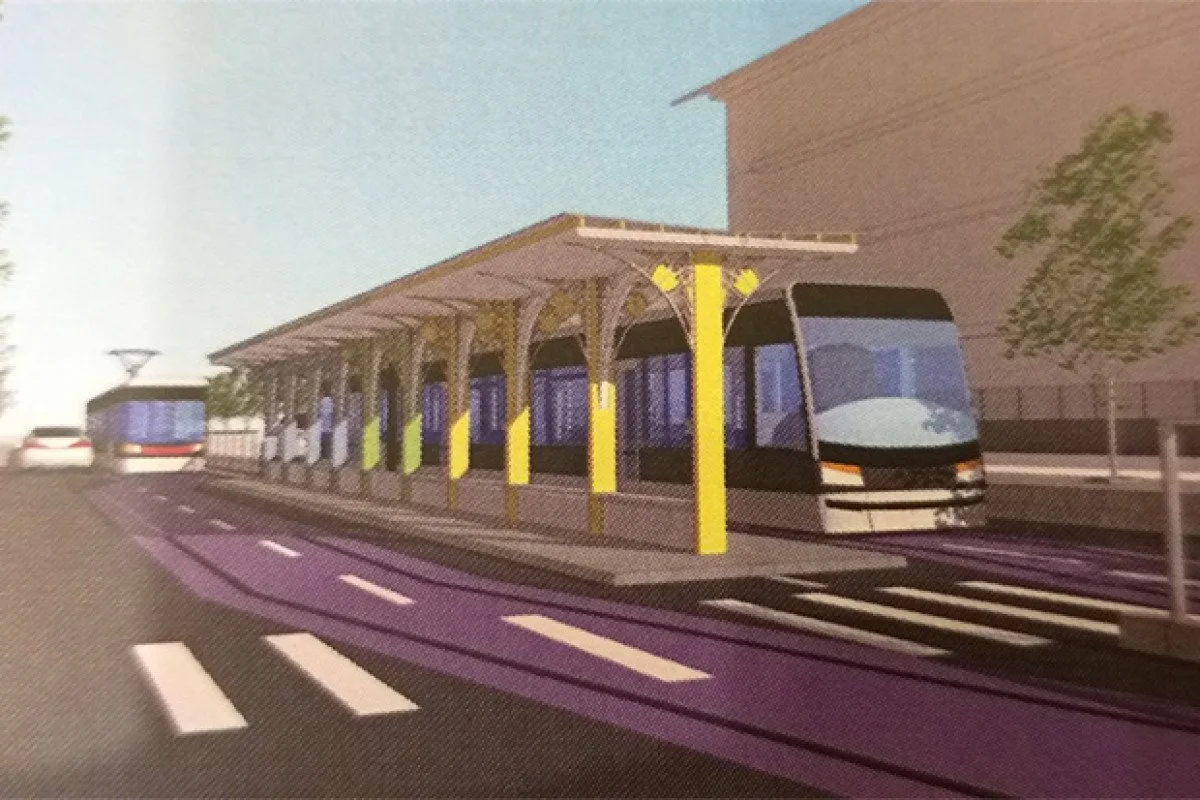
The most consequential is the Phuket Mass Transit System — a 42-kilometre light rail line running from the airport to Chalong via 21 stations, developed by Thailand's Mass Rapid Transit Authority and planned to be operational by 2032. Running along Highway 402, it will be the island's first dedicated public transport spine, linking the airport corridor through Phuket Town and down to the south in a way that fundamentally changes which locations are accessible and which are not. A property near a future LRT station in a currently mid-market location is a different investment proposition from the same property without that connectivity — and the pricing gap between those two versions of the same asset is still visible now, in 2026, in a way it won't be as construction approaches.
The road network is also being expanded in parallel. A North-South Expressway through the Muang Mai–Koh Kaew–Kathu corridor will create a high-speed controlled-access route that reduces dependence on the existing trunk roads that buckle under peak-season pressure, while the Kathu-Patong Tunnel, 3.98 kilometres, four lanes, toll-free, will resolve the mountain crossing between Kathu and Patong that turns a short distance into a frustrating commute. These projects don't have the headline profile of an airport or a hospital, but they're the kind of infrastructure that quietly reshapes which parts of an island are viable for daily residential life, and which remain inconvenient enough to stay discounted.
The Private Sector Has Already Made Its Bet
If there is one indicator that investors in any market should pay attention to, it's when large, sophisticated private operators start committing capital to long-duration projects. Tourists attract restaurants. Residents attract hospitals, schools, and retail anchors — and the commercial commitments currently going into Phuket are distinctly the latter kind.
Central Phuket is expanding to 500,000 square metres, adding luxury brands, a dedicated food and dining zone, and a 22,400 square metre entertainment cluster including an aquatic experience, arena, and immersive park, with phased completion by 2028. This is not a mall upgrade; it's a fundamental repositioning of the island's retail and lifestyle infrastructure towards a permanently resident demographic. POP Phuket, a community mall going up in Cherng Talay near Bang Tao, tells the same story at a neighbourhood scale: more than 60% of its space goes to restaurants, cafés, and a supermarket, with the rest split between retail, spa, and lifestyle services. The developer is targeting over one million visitors a year, with international customers expected to make up roughly 80% of that traffic. That's infrastructure being built for people who live in the area, not for people who are passing through.
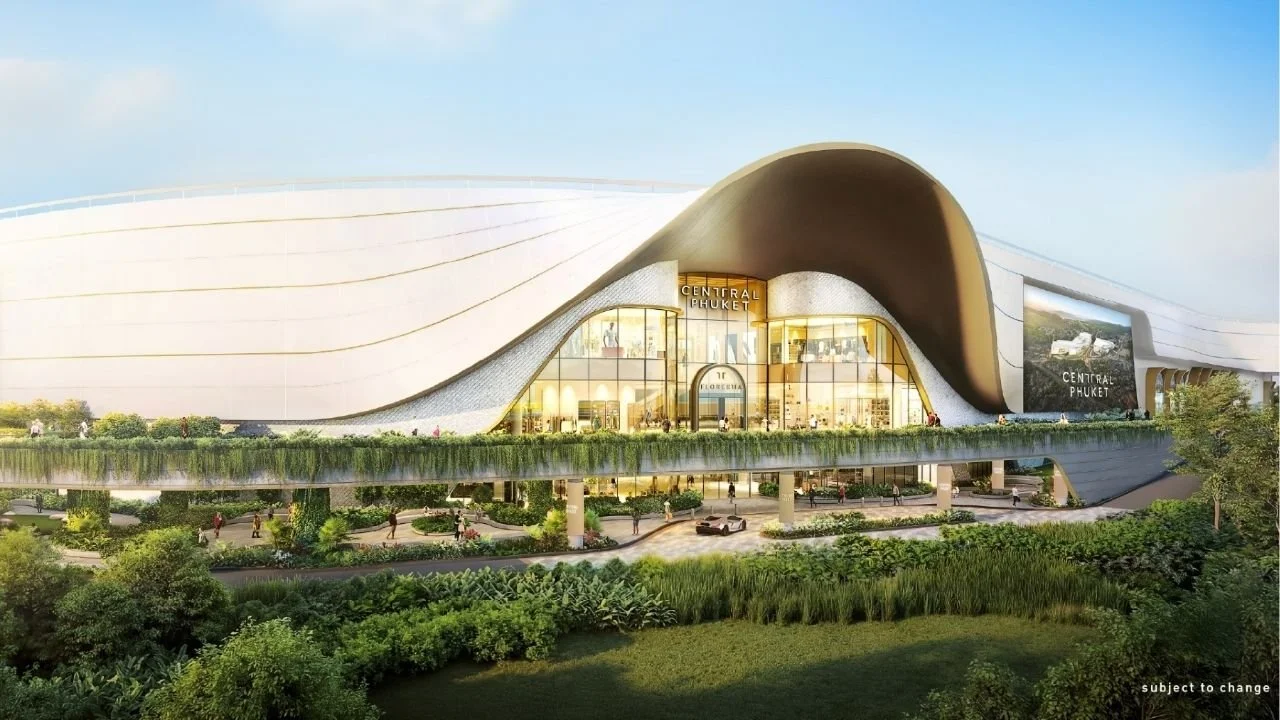
Central Group and Bumrungrad International Hospital are two of Thailand's most commercially rigorous operators. They don't commit this scale of capital to markets they believe are seasonal or speculative. The fact that both are building for 2027 and 2028 completion, alongside government infrastructure programmes working to the same horizon, is a form of market intelligence in itself.
The Window That's Open Right Now
Phuket is not a uniform market, and this transformation will not lift all property equally. A development along the light rail corridor, within the airport's catchment, close to the Bumrungrad campus, or inside the Bang Tao commercial belt is a fundamentally different proposition from one that is technically in Phuket but sits outside every one of those vectors. Distance matters more here than in flat, grid-based cities, and the gap between well-located and poorly located stock is likely to widen over the next five years rather than narrow.
That gap is also where the current opportunity sits. The airport expansion is funded. The Bumrungrad hospital is under construction. The commercial developments are in progress. The light rail has government backing and a stated construction timeline, though it remains in the planning and approval stage rather than under construction. Markets price what exists, not what's being built, and the built environment of Phuket in 2026 is still substantially the one that existed before any of these commitments were made. That gap has a defined horizon, tied to a series of completions between 2027 and 2032 that will change the island's character in ways that are already decided.
Identifying which specific projects sit in the path of this transformation, and which are priced attractively relative to where that path leads, is what On Invest and our on-the-ground Phuket partners focus on. The infrastructure map is largely public. The analysis of which developments sit at its most valuable intersections requires local knowledge that most investors looking at the island from Hong Kong or Singapore simply don't have.
If you want to understand which projects we think are best positioned within that window, with current availability and a clear view of the returns case, reach out to our team. We work with investors and expats across Asia and the Middle East, and we'll put together a tailored view based on your situation and goals.
Phuket Property Investment: Quick Answers
What new infrastructure is being built in Phuket?
Phuket is in the middle of a THB 10 billion airport expansion, a proposed second international airport in nearby Phang Nga, a 42km light rail line, a THB 4.3 billion Bumrungrad hospital, and major retail expansions including Central Phuket and POP Phuket, with completions staged between 2027 and 2032.
When will Phuket's light rail open?
The Phuket Mass Transit System, a 42km line with 21 stations running from the airport to Chalong, is targeting operation by 2032. As of 2026 it remains in the planning and approval stage rather than under construction.
Is Phuket a good property investment right now?
Phuket's infrastructure pipeline is largely funded or already under construction, while property pricing has generally not yet caught up with those commitments. That gap is the core investment case, though outcomes vary by location and depend on individual circumstances, and this isn't financial advice.
When does the Bumrungrad Hospital in Phuket open?
Bumrungrad International Hospital's Mai Khao campus, a THB 4.3 billion project three kilometres from Phuket International Airport, is due to open its first phase in 2027.
When will the Phuket airport expansion be complete?
Phuket International Airport's Phase 2 expansion, a THB 10 billion project raising capacity from 12.5 million to 18 million passengers a year, is part of AOT's wider five-year, THB 80 billion nationwide investment programme.