

Living Like a King or Queen for A$1,800 a Month: Why Aussies Are Looking at Thailand
A$630 a month buys Jay Houston a high-security condominium with two pools in Thailand. His rent, he says, is a quarter of what he paid in Australia, and posts about his lifestyle racked up more than 3 million views in two days, according to 7 News. The clip landed as ASEAN NOW reports that rising living costs are pushing more Australians to consider living overseas, and the number holding more than one job has passed one million for the first time.
It makes for a great headline. Here is what the numbers actually show, and what the viral version leaves out.
What does A$1,800 a month buy in Thailand?
ASEAN NOW reports Houston's rent at A$630, power at about A$60, water at about A$4 and Wi-Fi at about A$2. In the 7 News segment he also cites healthy meals from around A$8 and transport from around A$1.50. Back in Australia, he says, filling a borrowed car's tank on a Melbourne visit cost A$240.
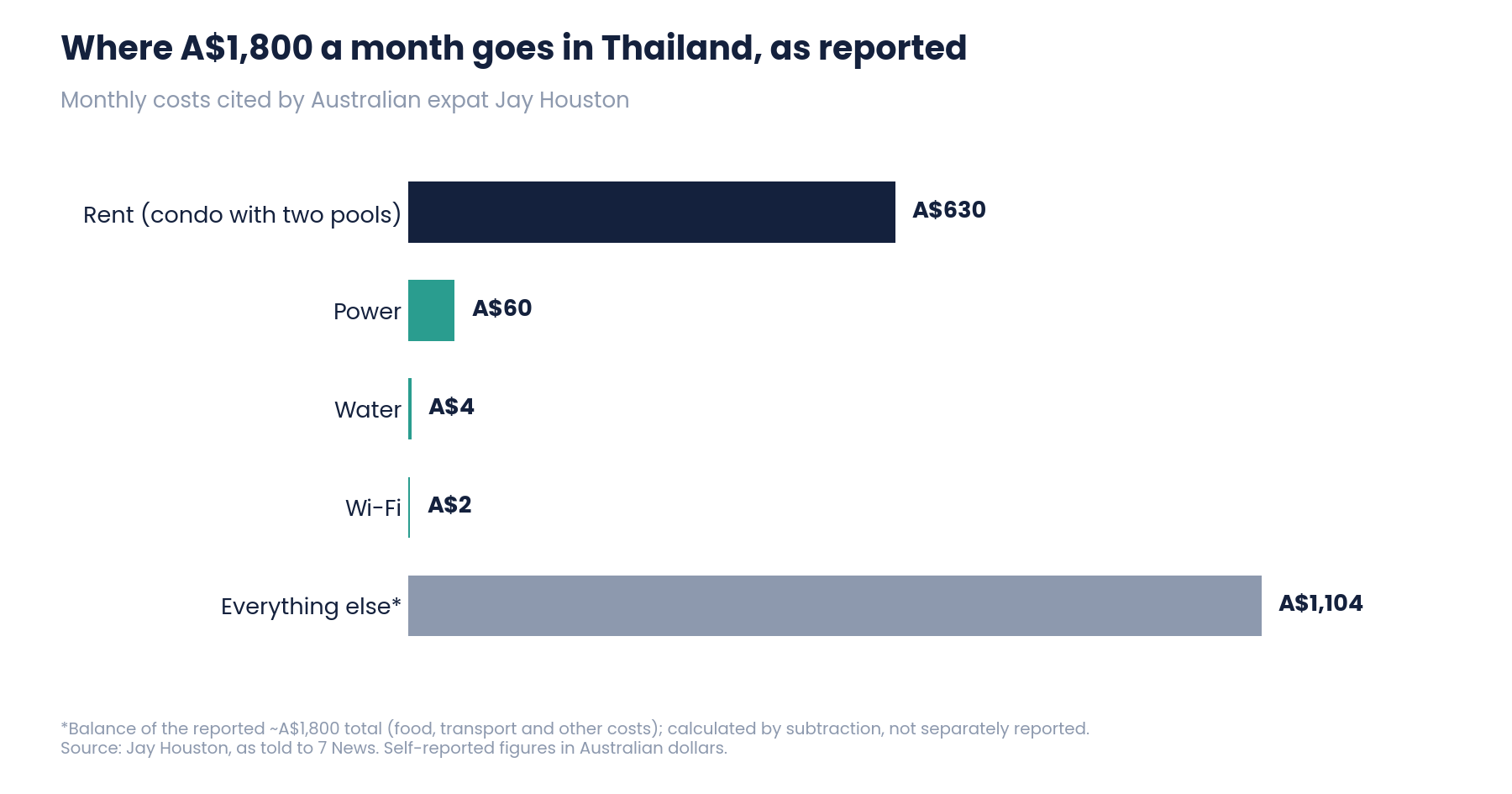
Jay Houston's reported monthly costs in Thailand, in Australian dollars. The "everything else" bar is the balance of his reported A$1,800 total.
These figures are self-reported and reflect one person's choices. Yahoo News Australia puts his overall spending closer to A$2,000 a month, and expat cost guides suggest a comfortable single budget of US$1,500 to US$2,500, with rent and medical insurance the biggest swing factors.
Are Australians really leaving in record numbers?
The Australian Bureau of Statistics recorded 263,000 migrant departures in 2024-25, up 13% on the year before. Two details matter. That count covers anyone who had lived in Australia for 12 months or more, including working holiday makers and international students heading home, not only Australian citizens relocating. And departures are still below the pre-pandemic level.
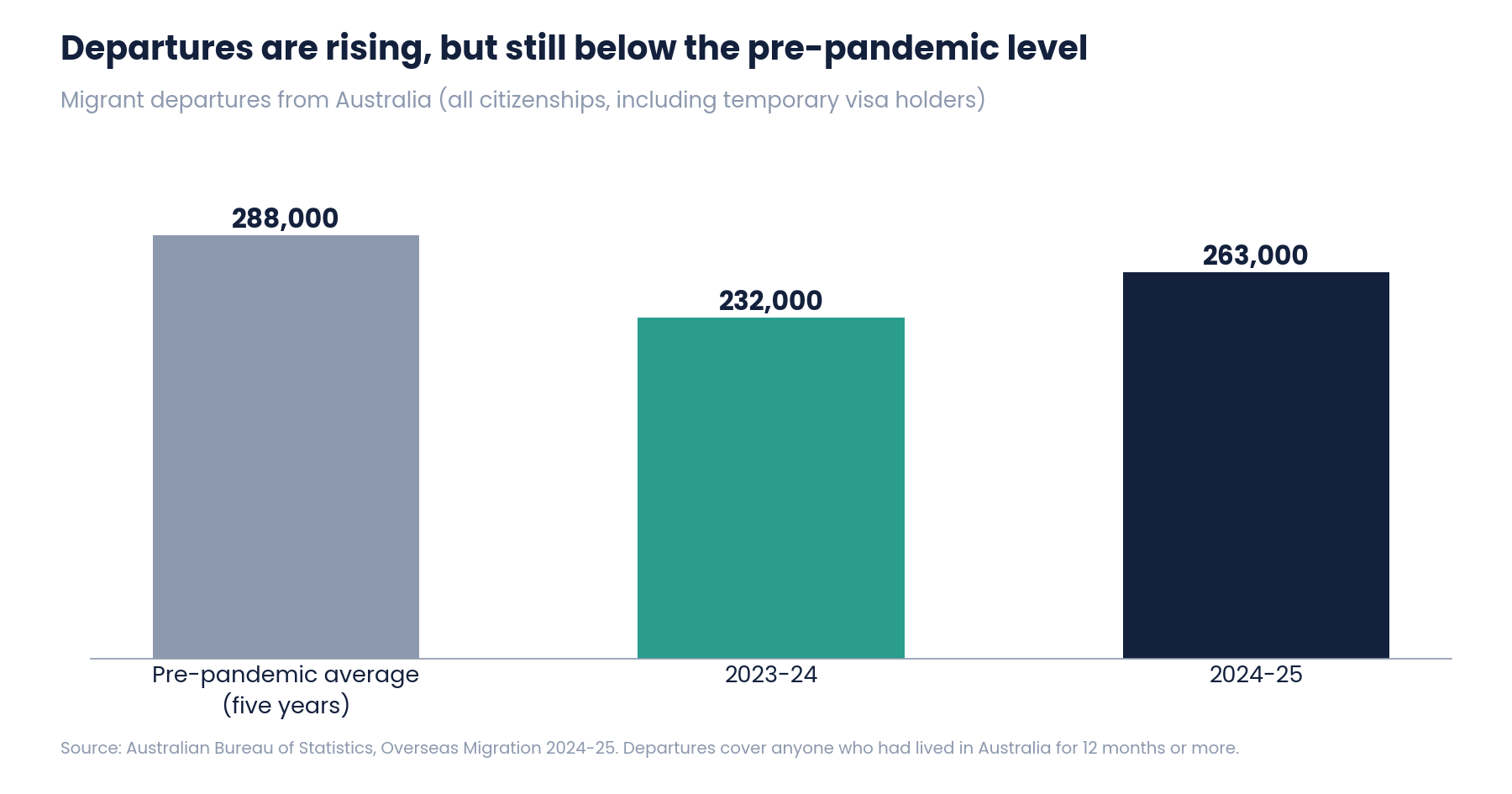
Migrant departures from Australia, all citizenships. Source: Australian Bureau of Statistics.
The 7 News segment pointed to growing interest in Southeast Asia, including Thailand, the Philippines, Malaysia and Indonesia, driven by lifestyle and cost of living. It also said expats prioritising safety, infrastructure and healthcare were looking at places such as Malta, Portugal and Singapore, with Poland a top pick at around A$1,700 a month.
Can Australians retire in Thailand? The catches behind the viral numbers
A cheaper life abroad comes with real homework attached:
Visa requirements. Whilst there are plenty of visa options available in Thailand, the retirement visa is for people aged 50 and over, with financial and insurance requirements including either 800,000 baht in a Thai bank account or 65,000 baht in monthly income.
No working on a retirement visa. Thailand's Ministry of Foreign Affairs says employment of any kind is strictly prohibited for holders of the long-stay retirement visa. The segment mentions Houston finishing work by early afternoon and running an online business. Never fear, there are plenty of visa options for those who do want to work: the Destination Thailand Visa, for example, is designed for remote workers earning from outside Thailand, while working for a Thai employer requires a work permit. Confirm which category fits you before you go.
Insurance. ASEAN NOW reports Houston chose the wrong medical policy when he first moved, a mistake he described as costly and nearly fatal. He now runs a business helping other Australians with insurance, visas and housing.
Rules can change. Foreign property ownership rules in Thailand are subject to change, and visas typically need renewing every year.
Making a lower-cost life work
A lower cost of living stretches whatever income you bring with you. That is why people who make a move like this work usually have income that does not depend on local prices: a pension, savings, or investments.
For some, that includes rental income from property held in established markets. UK buy-to-let, for example, pays rent in sterling, and you can see where we focus on our Birmingham, Manchester and Derby pages. It isn't risk-free: rental income depends on occupancy, running costs, tax and exchange rates, and property works best as one part of a diversified plan rather than the whole of it.
If you're weighing a move abroad, talk to your wealth manager about how your income, tax residency and investments fit together before you commit. Visa rules, tax treatment and insurance requirements vary by person and change over time, so check current rules with official sources first.