

Why On Invest Has Partnered with Banyan – And Why Phuket Is One of Asia’s Most Compelling Property Markets
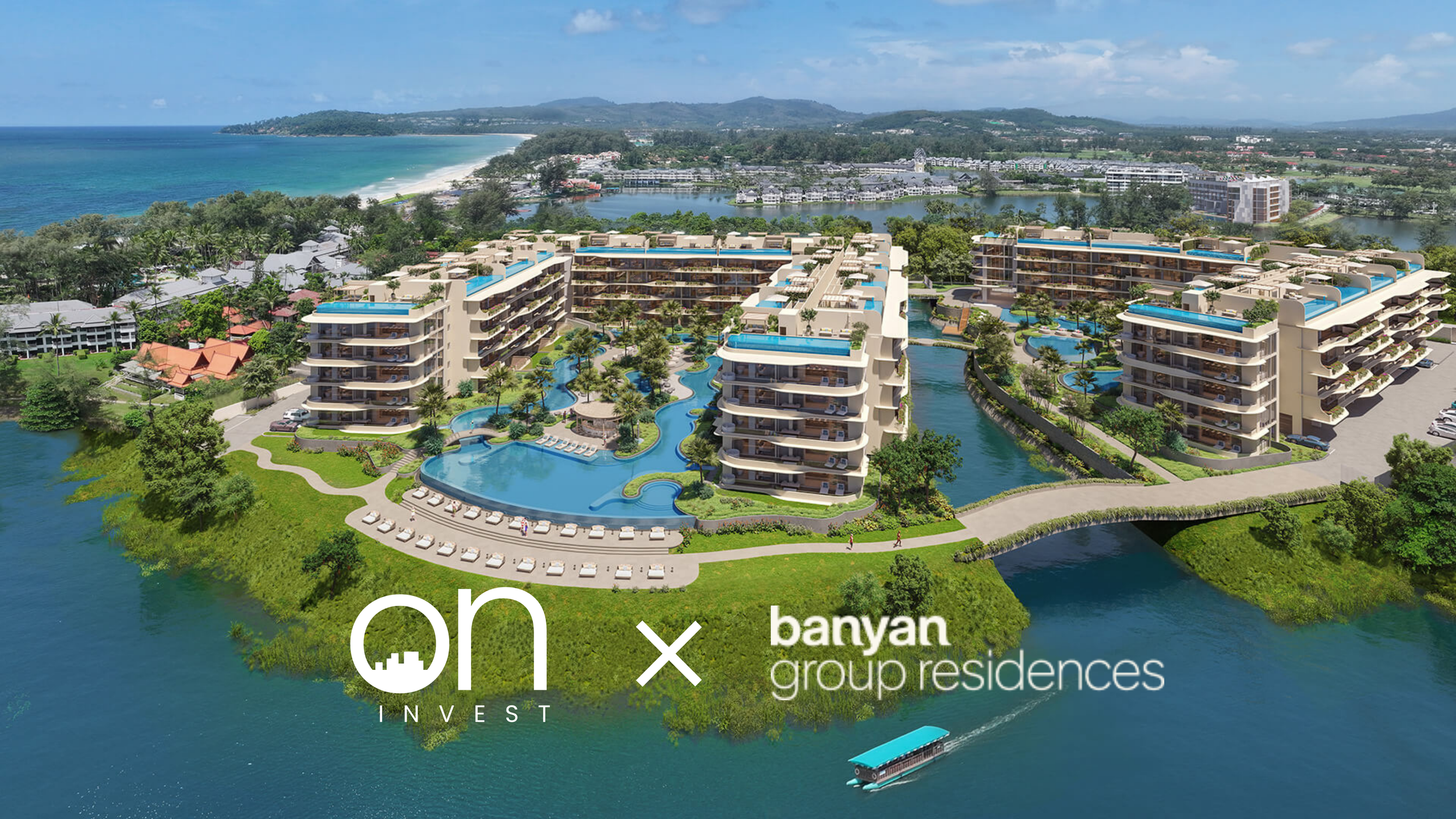
Several decades ago, Phuket was known primarily as a holiday destination – a place people passed through for short stays and seasonal tourism. But today, the island is undergoing a quieter but more meaningful transformation, evolving from a tourism hotspot into a long-stay lifestyle destination attracting residents, remote professionals, and global investors alike.
For On Invest, this shift is not theoretical. For example, co-founder and director John Treacy has personally invested in a Banyan development, reflecting the company’s personal conviction in both the developer and the long-term trajectory of Phuket as a residential market.
“When we look at opportunities, the first question is always the developer. Banyan is widely regarded as one of the top-tier operators globally. Their track record, governance and scale gave us confidence not just in the project, but in the long-term ecosystem they are building in Phuket.”
It is this structural shift – not short-term momentum – that led On Invest to partner with Banyan Group, one of Asia’s most established hospitality and branded residence developers.
Why the Partnership?
When assessing opportunities in Phuket, On Invest prioritised operator quality over individual project marketing. Three factors made Banyan the clear partner of choice.
1) Category Leadership in Branded Residences
Banyan has positioned itself as a global leader in branded residential development, ranking No.1 in Asia by volume and fifth globally in branded residences.
As Phuket itself ranks among the top global markets for branded residences, partnering with a category leader materially reduces execution risk.
Branded residences are one of the fastest-growing segments of global real estate. According to CBRE, branded residences in the same location can generate 50%–80% higher rental gross yields than comparable non-branded projects, reflecting the value investors place on professional management, hospitality standards, and global brand recognition.
In resort markets especially, brand trust can materially influence occupancy resilience and resale liquidity.
2) Institutional-Grade Global Hospitality Operator
Banyan Group has been operating for more than three decades and has grown into a global hospitality platform with over 100 hotels and resorts worldwide, reflecting operational depth beyond any single geography.
The group is also publicly listed on the Singapore Exchange and in Thailand, introducing governance standards and reporting transparency that are relatively uncommon in resort real estate development.
3) Flexibility Across Price Points and Capital Structures
Banyan’s portfolio caters to a broad range of investors:
Residences from approximately 8 million baht (£190,000) through to ultra-luxury villas approaching £10 million
Initial capital commitments from around 20%
Completed properties, near-term deliveries (~18 months), and longer off-plan timelines (3–4 years)
The developer also offers extended staged payment structures – including plans of up to five years in selected developments – an extremely rare feature in resort real estate that reflects strong balance sheet capacity and long-term master planning.
This combination of price accessibility, timeline flexibility, and capital staging allows investors to align purchases with liquidity strategy and personal investment horizon.
Why Phuket – and why now
1) The market is being shaped by longer-stay demand, not just tourism cycles
Phuket’s rental market is no longer driven solely by short-term visitors. The island is attracting:
Remote professionals and digital nomads
Wellness and fitness communities
Families relocating within Asia
Long-stay tenants seeking lifestyle flexibility
This broadening of tenant profiles has helped reduce traditional seasonality. While peak periods remain stronger, the “all highs and lows” volatility investors typically associate with resort and seasonal markets has narrowed compared with prior cycles, supporting more consistent occupancy across the year.
2) Rental performance can be strong
Phuket can deliver attractive rental outcomes in high-demand pockets, particularly where properties are well located and professionally managed.
Bangkok Post reporting has cited rental returns reaching approximately 9–10% per year in certain segments, supported by demand from digital nomads, expatriate professionals, and longer-stay tenants. Separate publication has referenced yields exceeding 10% in specific periods or micro-markets – reinforcing that performance can be compelling, though not uniform across the island.
“Historically, Phuket’s rental yields fluctuated significantly between high and low season,” explains Sîon Bennett, co-founder of On Invest who has also personally invested in a Banyan development. “That gap is becoming smaller as the island attracts more long-stay residents and remote professionals. Gross yields often average around 9–10%, with net yields typically in the 6–8% range – but selecting the right location is critical for balancing short-term income and long-term capital growth.”
In resort markets, yield is rarely a blanket figure. Performance depends heavily on micro-location, management quality, and asset positioning within established districts.
3) Infrastructure is a deliberate long-term tailwind
Air connectivity remains fundamental to any island market, and Phuket is no exception. Phuket International Airport currently connects to approximately 70 destinations across 30 countries, reinforcing its position as one of Southeast Asia’s primary leisure gateways. Demand has been evident in recent traffic milestones, with the island recording 393 flights and more than 71,000 passengers in a single day, highlighting the scale and resilience of inbound travel.
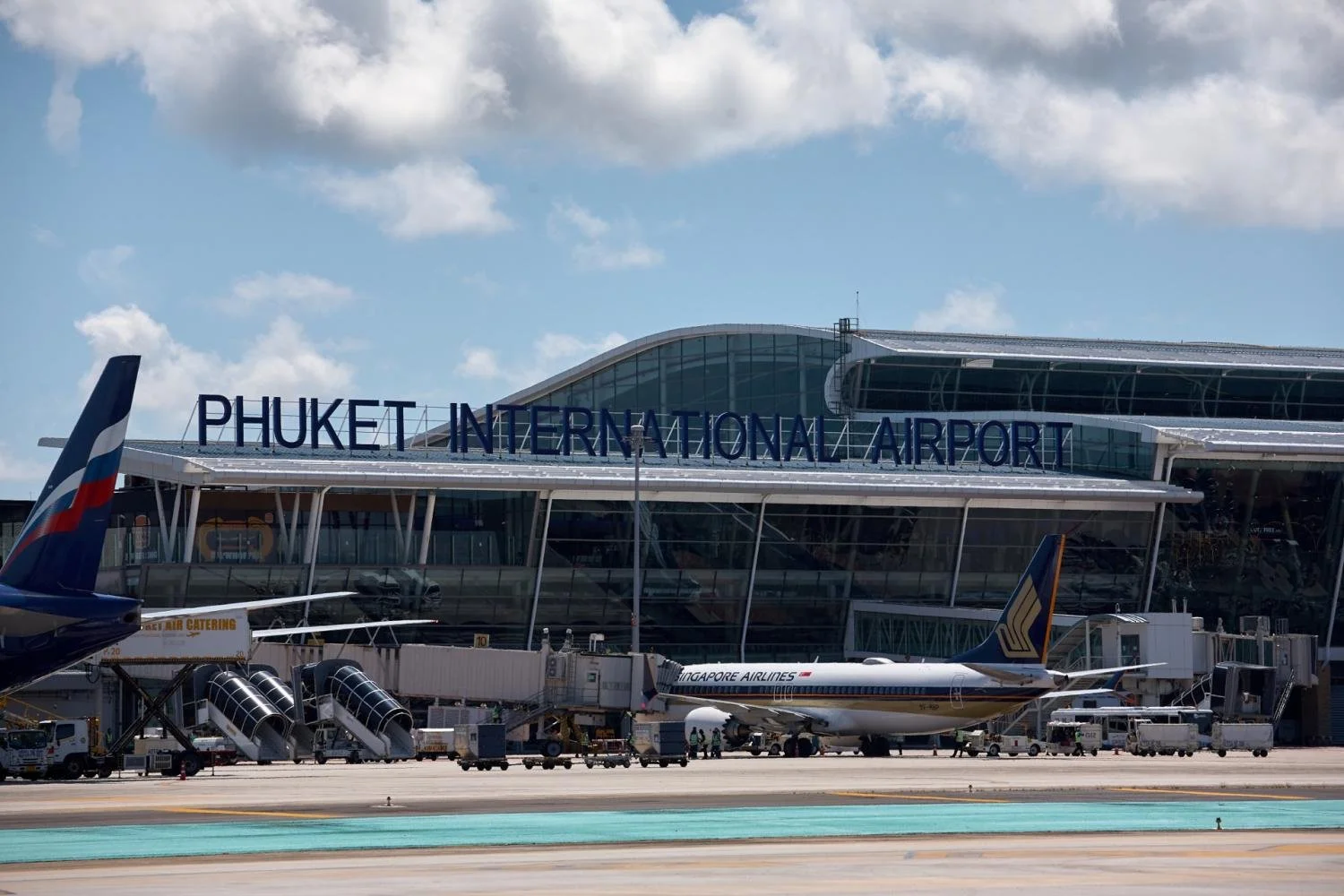
Looking ahead, Bangkok Post has reported plans to expand Phuket International Airport’s capacity to at least 18 million passengers annually by 2029, supported by investment of around 6 billion baht (~US$170–190 million). In parallel, Airports of Thailand has explored additional long-term capacity through a proposed Andaman International Airport in northern Phuket, with reports suggesting construction could begin around 2027 and completion targeted around 2032, at an estimated cost of approximately US$2.2 billion.
4) Phuket is now globally visible in branded residences
Phuket is no longer simply a resort destination – it is now a recognised global branded residence market.
CBRE Thailand has stated that Phuket ranks fifth globally in branded residence inventory, placing it alongside established lifestyle cities such as Miami and Dubai – a notable evolution for what was once considered purely a seasonal tourism market.
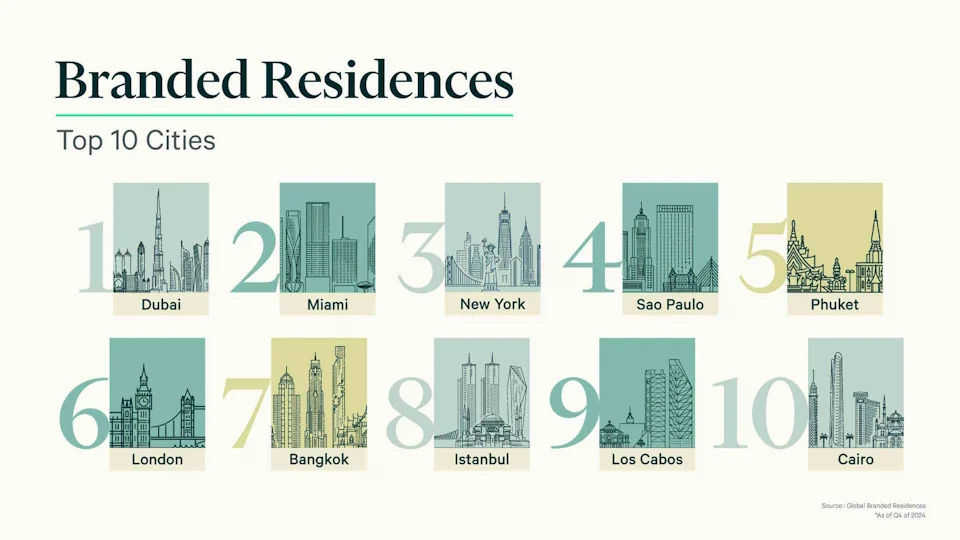
Source: CBRE Thailand
5) Long-term capital growth has been meaningful – with clear area winners
Over the past decade, Bangkok Post reporting has indicated that Phuket recorded an average annual capital gain of approximately 6.4%, placing it among the stronger-performing resort markets in the region.
Importantly, the demand profile today is broader than it was pre-pandemic. Phuket is no longer supported solely by short-stay tourism; it is increasingly underpinned by long-term residency demand. This diversification provides a more stable foundation for capital values compared with previous cycles that were heavily tourism-dependent.
Within the island, Bang Tao and the Laguna district have consistently been among the strongest-performing micro-markets. Land prices in these areas have experienced extraordinary growth, far exceeding a mere doubling in recent years. Data indicates inland land prices more than tripled in just 24 months, rising from THB 8–10 million to THB 25–30 million per rai. Furthermore, land prices in Bang Tao have increased over 10-fold between 2004 and 2025.
6) Ownership clarity: foreigners can buy condos freehold (within quota)
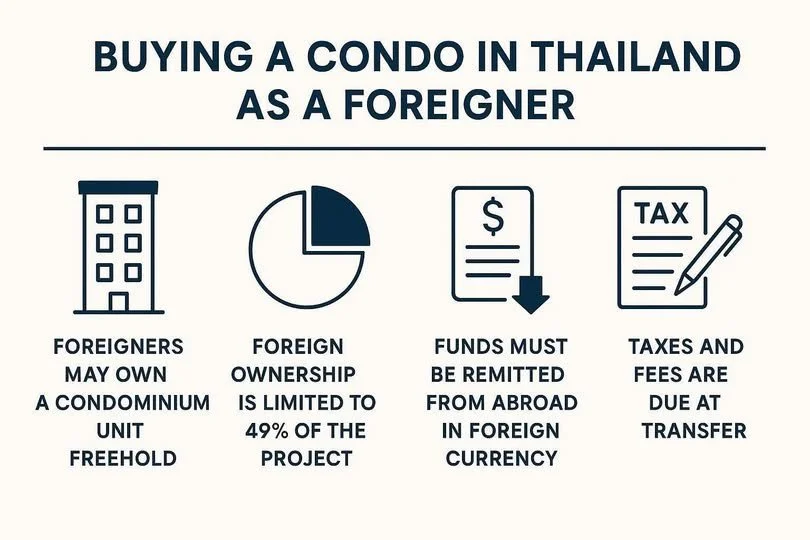
Thailand’s condominium framework is a practical advantage for international buyers: foreigners can purchase condominium units on a freehold basis, subject to the 49% foreign quota (measured by total saleable area).
Compared to many global resort markets, this provides clarity of title and ownership security for international buyers.
Join our upcoming investor event
On Invest will host a series of upcoming events covering:
why Phuket is evolving beyond tourism
the rise of branded residences globally
Banyan’s pipeline, positioning and payment structures
rental performance and ownership considerations
Register here:
Singapore, 18th March - https://41ir52.share-na2.hsforms.com/211HsA3eRRc6GHcVdoF7l0g
Hong Kong, 25th March - https://41ir52.share-na2.hsforms.com/2e89dxDswQqyiZRCxSBNd0w