

What Investors Should Know About Mayfield – Manchester’s Eastern Gateway Reborn
Manchester is no stranger to transformation. In fact, the city is widely cited in UK urban policy and property circles as one of the country’s most successful post-industrial regeneration stories.
But, even with that said, few projects carry the scale, ambition and long-term impact of the Mayfield regeneration we’re seeing at the moment.
Once a derelict brownfield site behind Manchester Piccadilly Station, Mayfield is now at the centre of one of the UK’s largest urban renewal programmes, with profound implications for residents and property investors nationwide and overseas.
A £1.4–£1.5 Billion Masterplan
Mayfield is a £1.4–£1.5 billion mixed-use regeneration scheme covering around 24 acres of land on the eastern edge of Manchester’s city centre – a strategic location adjacent to Piccadilly Station and within walking distance of the city’s busiest transport interchange.
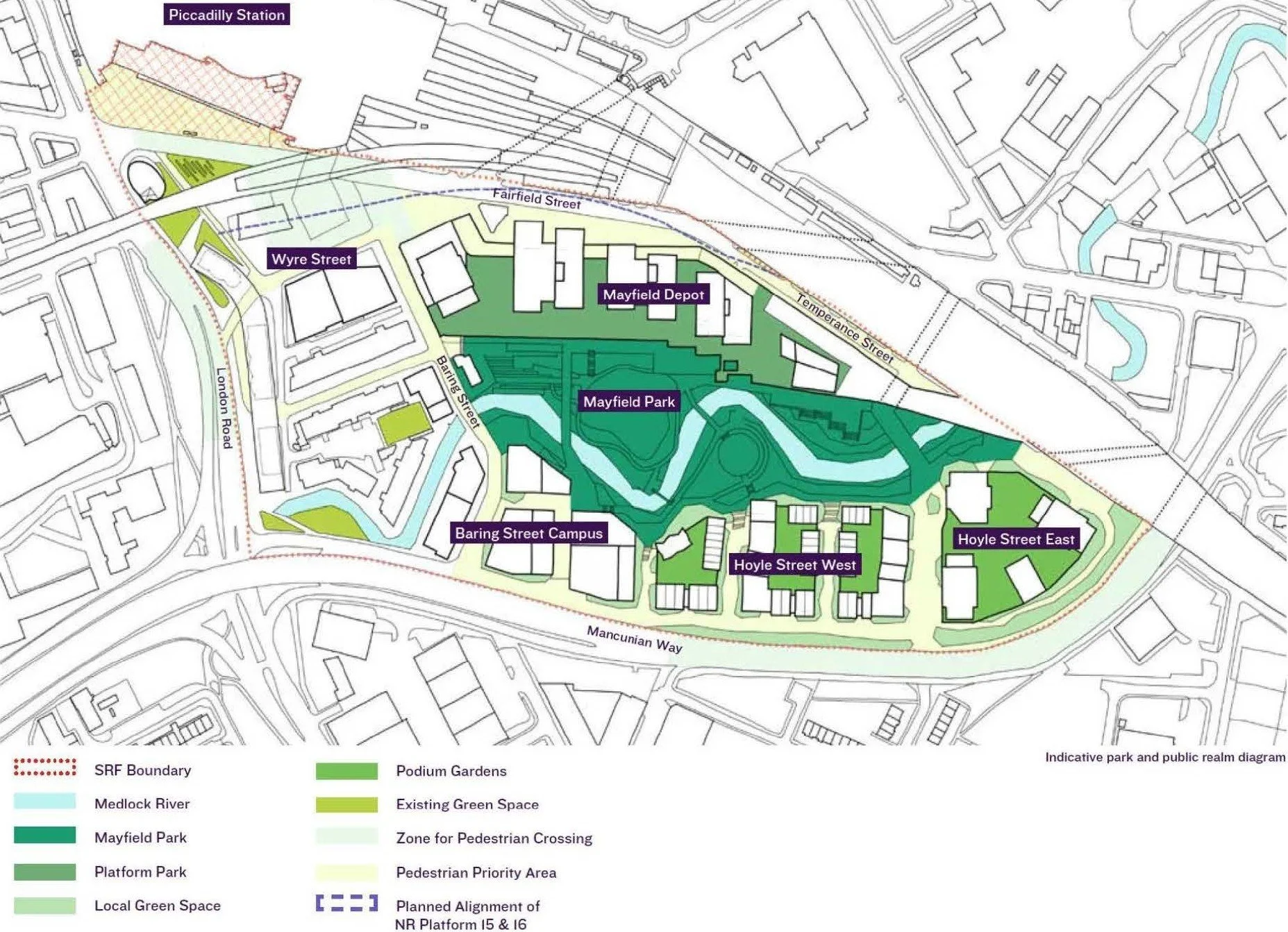
Delivered by the Mayfield Partnership — a public-private venture including Manchester City Council, Transport for Greater Manchester, regeneration specialists and developers LandsecU+I and LCR Property – Mayfield aims to create a distinct new district that seamlessly blends living, working, leisure and public space.
What Mayfield Will Deliver
Within its broad masterplan, Mayfield is expected to include:
Up to approximately 1,500 new homes, offering a mix of one, two and three-bedroom apartments.
More than 2.3 million sq ft of commercial workspace, designed to support around 13,000 jobs.
Retail and leisure space, connecting residents and workers to cafés, shops and social hotspots.
A 650-bed hotel, catering to business travellers and visitors.
A vibrant public realm, including Mayfield Park, the city centre’s first new major park in over a century, which we’ll talk about more later on.
The development is being rolled forward in phases, with several residential and commercial buildings now in planning or early construction, and land for further phases expected to be unlocked through ongoing planning activity.
Why Mayfield matters
To understand why Mayfield is attracting such attention, you just need to look at the last regeneration project of comparable scale within Manchester’s city centre: Deansgate Square.
That scheme, valued at around £1 billion, fundamentally reshaped the southern edge of the city. When the Deansgate Square towers were announced, surrounding areas – including Great Jackson Street, Castlefield, and the wider M3 and M15 postcodes – experienced a substantial leg up. Investors who bought early didn’t just benefit from the development itself, but also from it being adjacent to a new premium district taking shape.
This is often referred to as the “halo effect” – where large-scale regeneration drives value beyond the immediate site boundary.
Now, Mayfield is widely regarded as the last major regeneration opportunity of this scale within Manchester’s city-centre boundary. At £1.4–£1.5 billion, it exceeds Deansgate Square in gross development value and transforms a larger footprint of land, repositioning Manchester’s eastern gateway in the process.
Early indicators suggest a similar halo effect is emerging. Areas within a 10-minute walk of Mayfield, particularly across the M1 and M12 postcodes, are seeing increased buyer and occupier interest as the district evolves.
Mayfield Park: A New Heart for the District
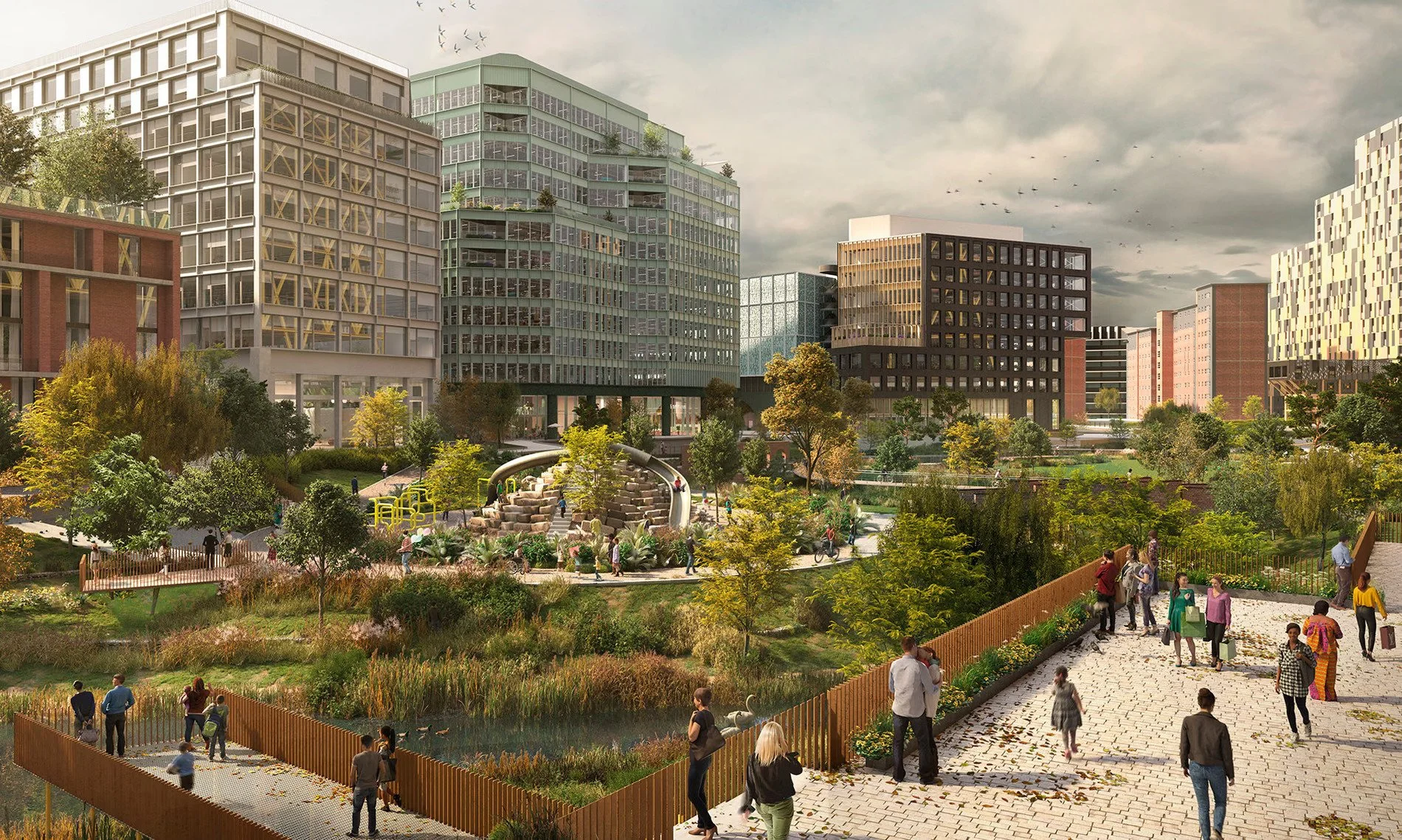
Central to the project is Mayfield Park — a 6.5-acre green space opened in 2022, the first new city centre park in Manchester for more than 100 years. Designed with ecological and recreational aims in mind, the park has already become a popular urban amenity, restored around the River Medlock with mature trees, play spaces, riverside walkways and landscaped lawns.
The park is not only symbolic of the site’s transformation but serves as a public-realm anchor, supporting both community life and quality of place – a factor consistently linked to higher property values and rental demand in urban residential markets.
Connectivity and Urban Integration
Mayfield’s location next to Piccadilly Station gives it a significant logistical advantage. With direct rail, tram and bus links to the wider North West, the development strengthens Manchester’s role as an integrated hub for business, commuting and cultural life.
This connectivity means the neighbourhood is well positioned to benefit from broader transport investment across the region, as well as Manchester’s ongoing economic growth trajectory – a key consideration for occupiers evaluating long-term tenancy or location decisions.
Investor Takeaways
For property investors – especially those focused on long-term value creation – Mayfield represents more than a project; it represents a market signal.
Supply meets demand at scale: With hundreds of homes and millions of square feet of commercial space planned, Mayfield will support both rental demand and business relocation.
Place-making that enhances value: Mayfield Park and the surrounding public realm are central to placemaking strategies that often correlate with stronger price growth and tenant retention.
Mixed-use environments reduce risk: Integrating residential, workspace and leisure amenities promotes diversified footfall and stabilises local property markets beyond cyclical residential demand.
Transport-linked neighbourhoods outperform: Proximity to transport hubs tends to broaden market appeal – from young professionals to corporate tenants – improving liquidity and reducing vacancy risk.
In a landscape where supply of high-quality, city-centre neighbourhoods is limited, Mayfield’s emergence as Manchester’s eastern gateway marks a defining chapter in the city’s property evolution — and a compelling opportunity for investors looking ahead to 2030 and beyond.